
How to Plan Spare Parts Inventory for Your Rolling Mill Operation
Unplanned downtime is the most expensive problem in steel production. In most cases, it is also preventable. Here is how operating mills build a parts inventory strategy that keeps production running.
For steel plant operators, the cost of an unplanned stoppage is immediate and measurable. Lost output, disrupted delivery schedules, and emergency sourcing at premium cost all follow from a single parts failure that was not anticipated. Industry estimates consistently place unplanned downtime costs at thousands of dollars per hour for an operating steel mill, and the most common root cause is not equipment failure in the abstract: it is the absence of a critical component when it is needed most.
Spare parts planning is not a procurement task that sits at the edge of operations. It is a production continuity strategy, and for rolling mills in particular, it deserves the same structured approach that operators apply to production scheduling and quality management.
This guide explains how to build that strategy from the ground up.
Why Rolling Mill Spare Parts Planning Is Often Underestimated
Most capital investment decisions in the steel industry focus on the rolling mill itself: specifications, output capacity, automation level, and delivery timeline. The parts program that will support that mill for the next 20 to 30 years rarely receives the same attention at the planning stage.
The result is that many operations start reactive. Parts are ordered when something fails or wears out, lead times are discovered under pressure, and the true cost of unpreparedness shows up in production reports rather than procurement budgets. For older mills, the problem compounds further when original documentation is incomplete, previous operators did not maintain proper parts records, or the original manufacturer no longer supports the equipment.
There is also a common assumption that specialized rolling mill components can be sourced quickly when needed. For standard consumables this is sometimes true, but for precision-engineered components such as roll neck bearings, guide boxes, or pinion shafts, lead times from manufacture or import can stretch to weeks or months. An operation without a minimum stockholding for these items is carrying a risk that is difficult to quantify until it materializes.
The Three-Tier Classification System
The most practical framework for rolling mill spare parts planning organizes every component into one of three tiers based on failure impact and replaceability. This structure determines what you stock, how much you hold, and how urgently you manage replenishment.
Tier 1: Critical Parts
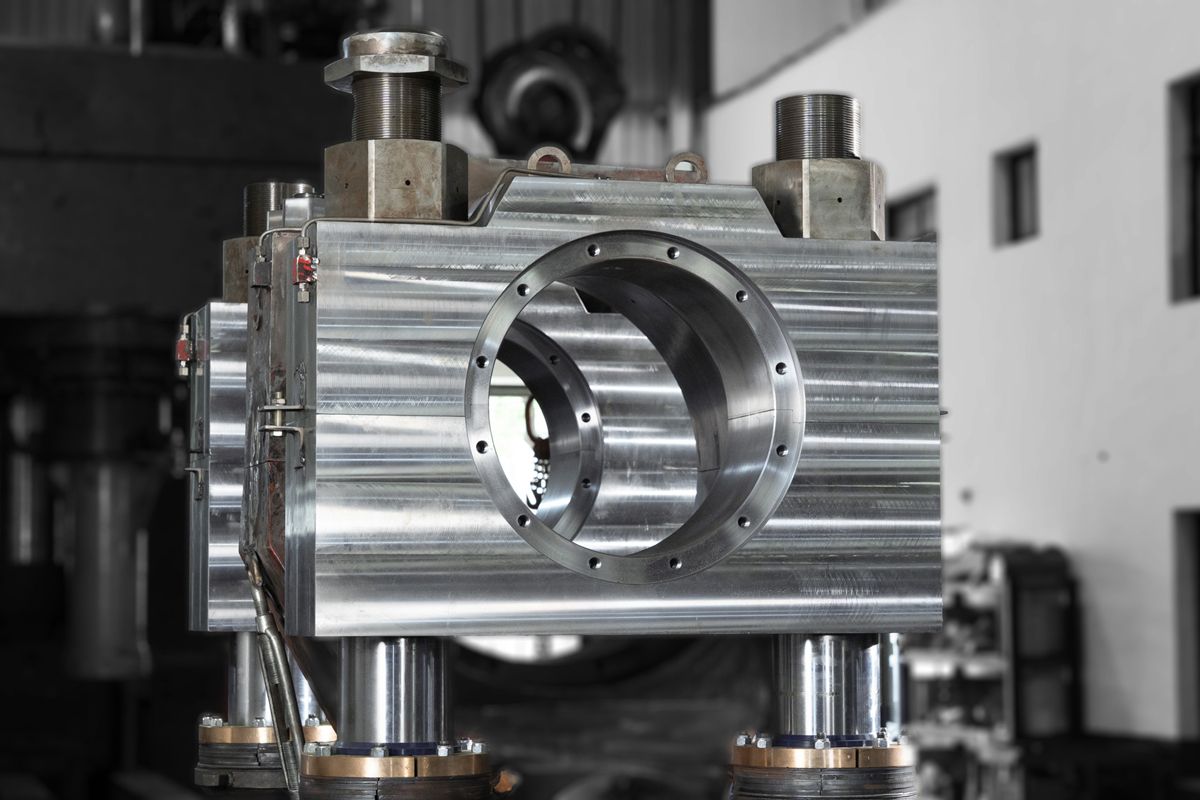
Critical parts are those whose failure stops production immediately and for which no workaround exists while a replacement is sourced. For most rolling mill operations, this category includes roll chocks, roll neck bearings, guide boxes, pinion shafts, and key drive components. A failure in any of these areas takes the mill offline until the part is replaced.
The rule for Tier 1 is straightforward: at least one spare must be held in stock at all times, and replenishment must be triggered as soon as a spare is consumed. Lead time from your supplier is the governing variable. If a critical component takes six weeks to manufacture or import, your stockholding policy needs to reflect that. Holding a single spare is not adequate if sourcing the next one takes longer than your acceptable downtime window.
Rolling mill parts for complete production lines and bar and section mill parts for structural steel operations each carry their own Tier 1 component profiles, which is why parts planning needs to be specific to your mill type and configuration rather than generic.
Tier 2: Important Parts
Important parts are those whose failure degrades performance or product quality but where limited workarounds are possible for a short period. Cooling system components, profile gauging sensors, and certain drive couplings often fall into this category. The mill can continue operating, but not at full specification or full output, and the window before the problem becomes critical is measured in hours or days rather than minutes.
For Tier 2, a minimum stockholding of one spare is standard practice, with lead times actively monitored. The goal is to ensure that a Tier 2 failure does not escalate into a Tier 1 stoppage because the replacement part was not available in time.
Tier 3: Consumables and Wear Parts
Wear parts with predictable replacement cycles sit in the third tier. Rolls, guides, and liners degrade at rates that experienced operators can track and forecast with reasonable accuracy. These parts are managed through scheduled replacement rather than emergency stockholding. The planning task is less about holding spares and more about aligning procurement cycles with planned maintenance windows so that replacements arrive before they are needed, not after.
How to Calculate Minimum Stockholding
Once parts are classified, setting minimum stockholding levels requires four inputs:
Supplier lead time is the primary variable. This is the time from order placement to delivery of a ready-to-install component. For domestically sourced standard parts, this may be days. For precision-engineered or imported components, it can be months. Every Tier 1 and Tier 2 part should have a documented lead time that is reviewed at least annually and updated when suppliers or sourcing arrangements change.
Production schedule and maintenance windows determine when parts can be replaced. A mill running continuous shifts has a narrower window to install a replacement than one with scheduled weekly downtime. Your minimum stockholding needs to account for the realistic time between when a part fails and when it can safely be replaced without disrupting committed output.
Criticality tier acts as the multiplier. Higher criticality means less tolerance for stockout, which means either holding more spares or working with a supplier who can guarantee shorter lead times for critical items on a service level agreement.
The cost comparison is worth making explicitly. Calculate the cost of holding one additional critical spare against the cost of one hour of unplanned downtime. In most operating steel mills, the math resolves quickly in favor of holding the part.
The Problem of Obsolete and Legacy Parts
For operations running mills that are more than 15 to 20 years old, parts planning carries an additional challenge. Original manufacturers may no longer support the equipment. Components may be discontinued. Lead times for surviving sources can be unpredictable, and in some cases the only route to a replacement is custom manufacture from scratch.
This is where reverse engineering becomes a practical operational tool rather than a niche capability. When an original part is unavailable or prohibitively priced, an experienced manufacturer can produce a replacement to specification from the original component, often with material or design improvements that improve on the original performance. The article on reverse engineering of rolling mill parts covers this process in detail, including the commercial case for using it proactively rather than only in emergencies.
For operators of older mills, identifying which Tier 1 and Tier 2 components are at risk of obsolescence is a worthwhile exercise. Building a list of components where original sourcing is uncertain and discussing reverse engineering options with your supplier before a failure occurs is significantly less expensive than doing it under production pressure.
Upgrades vs. Like-for-Like Replacement
Spare parts planning occasionally surfaces a more significant decision: whether a component that fails or wears out repeatedly should be replaced like-for-like, or whether the right answer is a targeted upgrade.
Repeat failure patterns are the clearest signal. If a specific component fails more frequently than its design life suggests it should, or consistently underperforms in your operating environment, sourcing an identical replacement simply restarts the same cycle. In these situations, a component-level upgrade can deliver better reliability and lower long-term maintenance cost without requiring a complete mill shutdown or full line replacement.
Targeted upgrades are also worth considering when a mill audit identifies components that are functioning but approaching end of designed service life, particularly where improved versions of those components are now available. This is the point where parts planning overlaps with a broader mill upgrades and parts strategy, and where an engineering review of the full production line can identify where the best return on maintenance investment is available.
Working With Your Supplier to Build a Parts Support Plan
A well-structured parts inventory program is not developed in isolation. The most effective approach involves your rolling mill supplier as an active partner in the process rather than a reactive source for individual orders.
In practical terms, this means sharing your mill documentation and full component lists with your supplier so they understand your exact configuration. It means establishing clear lead time expectations for critical components and, where production continuity demands it, putting service level agreements in place for minimum stockholding or priority supply. It means scheduling stock reviews to coincide with planned maintenance cycles rather than treating parts procurement as an ad-hoc activity.
For larger operations, an on-site inventory audit conducted in partnership with your supplier can identify gaps in current stockholding, flag components approaching end of service life, and produce a prioritized action plan for closing the most significant risks first.
The outcome is a parts program that is documented, structured, and connected to your production and maintenance schedules, rather than a collection of orders placed under pressure.
Frequently Asked Questions
What are the most critical spare parts to keep in stock for a bar and section mill?
For bar and section mill operations, Tier 1 stockholding should cover roll chocks, roll neck bearings, guide boxes, and key drive components. The specific list depends on your mill configuration. Reviewing your bar and section mill parts requirements with your supplier, based on your actual component list and lead times, is the most reliable way to define your minimum critical stockholding.
How do I source spare parts for a rolling mill that is no longer supported by the original manufacturer?
Reverse engineering is the most common and practical solution. An experienced rolling mill manufacturer can produce replacement components to specification from the original part. This is particularly valuable for precision components where no direct market substitute exists. The article on reverse engineering of rolling mill parts explains the process and the commercial case for using it.
How often should rolling mill rolls be replaced?
Roll replacement frequency depends on the product being rolled, the steel grades processed, operating speeds, and the roll material itself. There is no universal interval. Experienced operators track roll wear against production tonnage and establish replacement cycles based on observed wear rates in their specific operating environment. This is a Tier 3 consumable that should be managed through scheduled replacement on a documented cycle.
What is the difference between planned maintenance and reactive maintenance for a rolling mill?
Planned maintenance replaces or services components on a scheduled cycle before they fail, based on known wear rates and service life data. Reactive maintenance responds to failures after they occur. The cost difference between the two is significant: planned maintenance is budgeted and scheduled around production; reactive maintenance interrupts production unpredictably and typically carries premium sourcing and labor costs. An effective spare parts inventory program is the foundation of any planned maintenance strategy.
Can Darting supply spare parts for rolling mills it did not manufacture?
Yes. Darting supplies rolling mill parts for a wide range of mill types and configurations, including mills not originally manufactured by Darting. Where original components are unavailable or discontinued, Darting’s reverse engineering capability allows replacement parts to be produced to specification from the original component.
Plan Your Parts Program Before You Need It
Spare parts planning requirements vary considerably depending on mill type, age, production volume, and the availability of original manufacturer support. The common factor across all operating mills is that the cost of planning is always lower than the cost of unplanned downtime.
Contact Darting to discuss your parts support requirements and how we can help you build a structured inventory program for your rolling mill operation.