
How to Replace Obsolete Rolling Mill Parts When OEM Support Ends
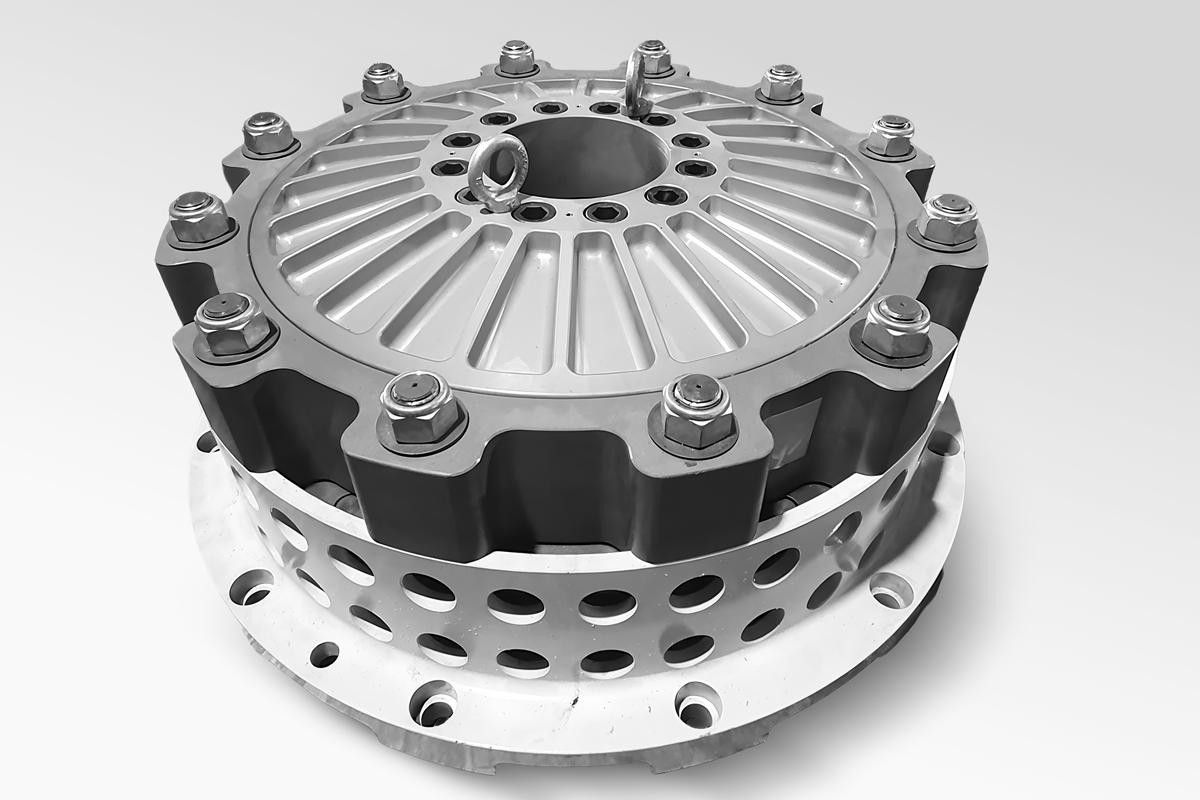
Obsolete rolling mill parts are components the original manufacturer no longer supplies, supports or holds drawings for. Three routes remain open: manufacture a new part to the original design, reverse engineer one from the existing component, or upgrade the assembly to a current design. All three let the rest of the mill stay in service.
Darting has designed, manufactured, installed and upgraded steel rolling mills for more than 50 years (as of 2026), with active projects in over 20 countries. We supply rolling mill parts for hot and cold mills, bar and section mills, and wire rod and coil mills, including installations we didn’t build ourselves.
The question isn’t usually whether a replacement can be made. It’s which of the three routes suits the component, the line and the production you’re running now.
Why Rolling Mill Parts Become Obsolete While the Mill Still Runs
A mill’s mechanical life is a good deal longer than its supply chain’s. Rolling mills routinely run for thirty or forty years. The companies that built them merge, change product ranges or close; the sub-suppliers behind individual castings, drives and control cards disappear sooner still.The result is an asymmetry that catches operators out. Your line still holds tolerance and still meets output, yet a single gearbox, shear blade or control card can take it down for weeks.
Which Components Tend to Go First
Across the mills we support, the parts that most often lose OEM backing are the ones that were specific to a particular line rather than catalogue items. Rolling mill stands, gearboxes and speed reducers head the list, followed by flying shears, pinch rollers and quench box systems.Cooling beds, roller conveyors, calibers, coiling machines and automatic bundling systems follow the same pattern. So do hydraulic assemblies and, fastest of all, control system components, where the electronics cycle is measured in years rather than decades.
Your Three Options When the Original Part Is Gone
An OEM part remains the first choice where it’s still catalogued, still priced sensibly and still fits. Where it isn’t, you’re choosing between copying, re-engineering or upgrading. Those three differ in more than price.| Option | When it applies | What governs the lead time | Main limitation |
|---|---|---|---|
| New part to original design | Drawings or specifications survive, and the design still suits your production | Material procurement, pattern or tooling, machining | Repeats any weakness the original design had |
| Reverse engineering | No drawings, no OEM, but a sample component exists | Measurement and material verification, then manufacture | Needs a component intact enough to measure |
| Targeted upgrade | The part has failed repeatedly, or your output requirement has changed | Engineering review, plus any interface work on adjacent equipment | May require changes to controls or handling either side |
The lead times above depend on the component and on material availability, so treat the column as the order of the work rather than a quotation. Get in touch with the drawing or the part number and we’ll give you a real figure.
Reverse Engineering From the Component Itself
When drawings, specifications and original parts have all gone, the component in your mill is the only remaining record of its own design. We measure it, verify the material, and manufacture from that.This is the route for custom or older equipment, and it’s where a rolling mill builder has an advantage over a general machine shop: we already know what the part has to survive. A worn component still yields its dimensions, though a component that has failed catastrophically may not, which is an argument for pulling the spare before the last one breaks.
A Targeted Upgrade Rather Than a Copy
Copying an obsolete part reproduces its faults along with its dimensions. If a component has been a recurring maintenance item for years, replacing it like for like buys you the same problem again on a fresh delivery date.Our R&D work covers modifying existing rolling mill equipment and adding functions to lines already in production. Quenching and cooling systems, cutting equipment, coiling equipment, mill stands and drives, material handling, automation and controls: each can be changed without a redesign of the whole line. The broader case for this approach is set out in our article on upgrading existing steel rolling mills, and we see an average productivity increase of 18% across the lines we upgrade. We also supply mill upgrades and parts for installations originally built by other suppliers.
How a Replacement Part Has to Fit the Rest of the Mill
Manufacturing the component is only part of the work. A rolling mill is a coupled system, and a part that’s correct in isolation can still be wrong in place.Mechanical and Drive Interfaces
Dimensional fit is the obvious requirement, and the easiest to verify. Speed matching across the stand, torque capacity at the coupling and thermal behavior in the quench zone are the ones that tend to surface after commissioning rather than before.Machine safety adds a further constraint where the replacement changes guarding, access or stored energy. ISO 12100:2010 sets out the risk assessment methodology that applies, and a modified assembly is, in practice, a new design for that purpose.
Controls and Automation
A newer component often expects a newer signal. Replacing a mechanically driven shear with a servo-driven one, for instance, moves work from the mechanism into the control system, and your existing PLC may or may not be able to take it.We supply individual components and integrate them with manual, semi-automatic and fully automated installations. Cutting, cooling, coiling and material-handling equipment all have to hand off correctly to whatever sits either side of them; that handshake, rather than the part itself, is where most retrofit problems appear.
How to Find Your Obsolete Parts Before They Fail
Check your mill for components that no longer have reliable OEM backing, and do it while the line is running. You’re looking for five conditions:- The original manufacturer has stopped supporting the equipment altogether, whether through closure, merger or a change of product range.
- The part is withdrawn.
- Sourcing has become slower or dearer each time you order, which is usually the first visible sign.
- The component is custom, or old enough that no direct equivalent exists.
- Failure would stop the line.
Anything meeting the last condition together with any of the first four is worth engineering now rather than later. Identifying these parts in advance gives you the time to reverse engineer or redesign them at a sensible pace.
This belongs in your spare-parts planning as well. A critical spares list should record which components would stop production and how quickly you could obtain another once the first spare is used; the second question is the one that usually goes unasked. Our guide to rolling mill spare-parts inventory planning covers the tiering in detail.
An obsolete component doesn’t make the rest of your mill obsolete. If the line still meets your output and quality requirements, replacing or upgrading individual parts will keep it earning. Send us the part number, the drawing or a photograph of what you have, and we’ll tell you which of the three routes fits.
Frequently Asked Questions
Can Darting supply parts for rolling mills made by another manufacturer?Yes. Darting provides parts, maintenance and upgrade support for rolling mills built by other manufacturers, which is a good deal of what we do. To start, we need the part number or drawing where one survives, or the component itself where none does.
What types of rolling mill parts can be replaced?Darting works across the whole line: stands, gearboxes, motors and speed reducers, flying shears, pinch rollers, quench boxes, cooling beds, conveyors, calibers, hydraulic components, coiling equipment and packing systems. Control system components are covered too, though those more often call for an upgrade than a copy.
Can an obsolete rolling mill part be upgraded rather than copied?Often, yes. Darting’s R&D team modifies existing rolling mill lines and adds functions to them, so where a component has been a recurring problem we’d normally review the surrounding equipment before quoting a direct replacement. Whether that’s worth doing depends on how the part has performed and on what your line has to produce now.
What does Darting need to reverse engineer a part?A physical sample is the minimum, and it needs to be intact enough to measure. Darting verifies material as well as dimensions, since a part reproduced in the wrong grade will fail early even when it fits perfectly. Drawings, maintenance history and the original operating conditions all shorten the work if you still have them.
Can new components work with an older automation system?Yes. Darting supplies components for manual, semi-automatic and automated rolling mills, then integrates them with the control system you already run. Where a new component expects signals your current PLC cannot provide, we’ll say so before manufacture rather than after installation.