
Refurbishing Seven Housingless Rolling Mill Stands For a C Channel Bar Line
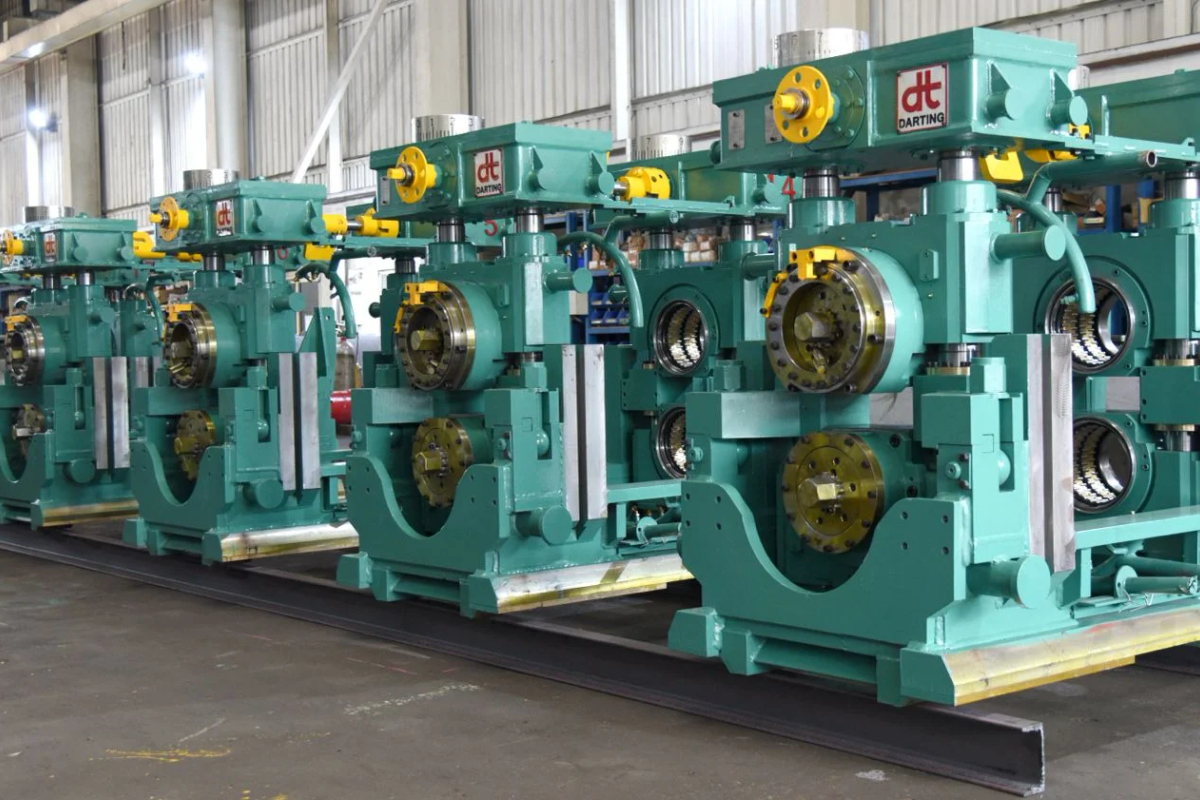
Darting recommends housingless rolling mill stand refurbishment every five years on C Channel Bar Lines. The seven stands on a C Channel Bar Line we built in Taiwan came back to our Taichung workshop in 2026 after five years of continuous rolling. We replaced the bearings and restored the worn fits, and every stand returned repainted and in as-new condition.
DARTING MACHINERY CO., LTD has designed, manufactured and installed hot steel rolling mills from Taichung since 1972, is ISO 9001 certified, and built and installed this line for a Taiwanese producer of C channel bar. The line was installed in 2020 and had been rolling since 2021, and the refurbishment was planned as preventative maintenance, with the aim of reducing product defects and avoiding unplanned downtime.
Work of this kind is part of our rolling mill upgrades and parts service, alongside the bar and section mill lines we build new. In the sections below we describe what we inspected and replaced on each stand, how the work was carried out, and what we would suggest to other section mill operators who are planning a similar refurbishment.
Why the C Channel Bar Line Came Back to Taichung After Five Years
Five years of continuous service is the interval at which we recommend refurbishing the housingless stands on a C Channel Bar Line, and this line reached it in 2026. The stands were still in production when the line was stopped for the work. A planned refurbishment is carried out on a date the mill chooses, before wear starts to affect the product, whereas an unplanned repair happens on whatever date a component fails.Our five-year recommendation for C Channel Bar Lines
Production on a C Channel Bar Line is sensitive to stand accuracy, because the dimensions and symmetry of the finished channel depend on each stand holding its roll gap and alignment, and a small loss of accuracy in one stand can show in the product well before anything fails outright.We base the five-year interval on the operating hours and throughput of a C Channel Bar Line in continuous production. For other products, or for a line that runs fewer hours or rolls less tonnage, the right interval may well be different, and we would suggest setting it from the line’s own operating hours, throughput and quality records rather than from a general rule.
What continuous rolling does to fits, threads and bearing seats
The roll gap accuracy of a housingless stand depends on a small number of close fits and threaded adjustments. Over several years of the hot rolling process, the load at each pass, the shock as each bar enters the stand, and the cooling water and scale around the rolls tend to wear the contact surfaces, open up clearances in the threads and bearing fits, and fatigue the bearings themselves.This kind of wear is gradual, and it usually appears first as a slow drift in the roll gap setting, more vibration or noise from the gearboxes, and more frequent adjustment by the operators. On this line, the strip-down confirmed that the bearings needed replacing and that the stands had taken considerable wear over their five years in service.
What We Inspected and Replaced on Each Housingless Stand
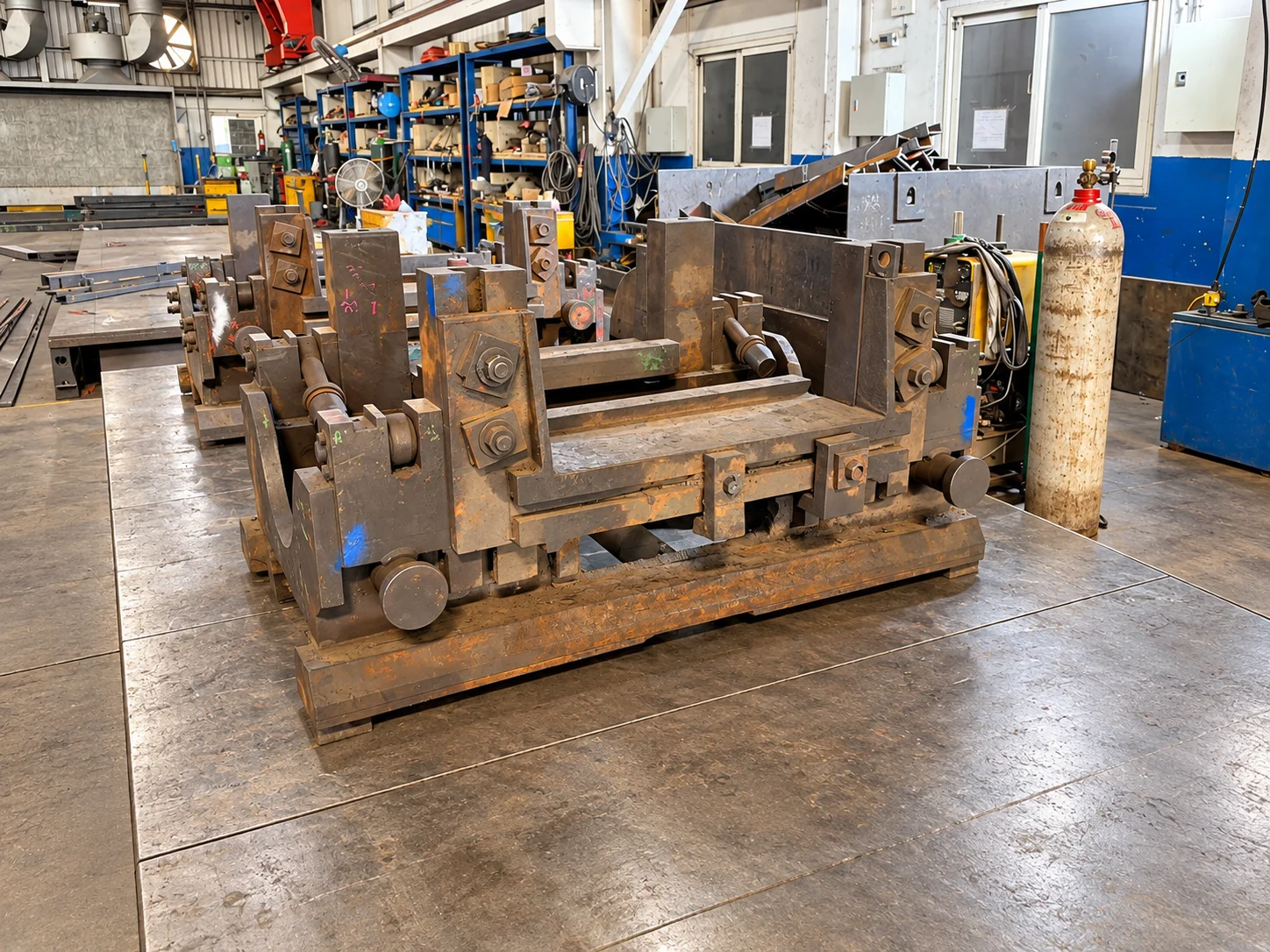
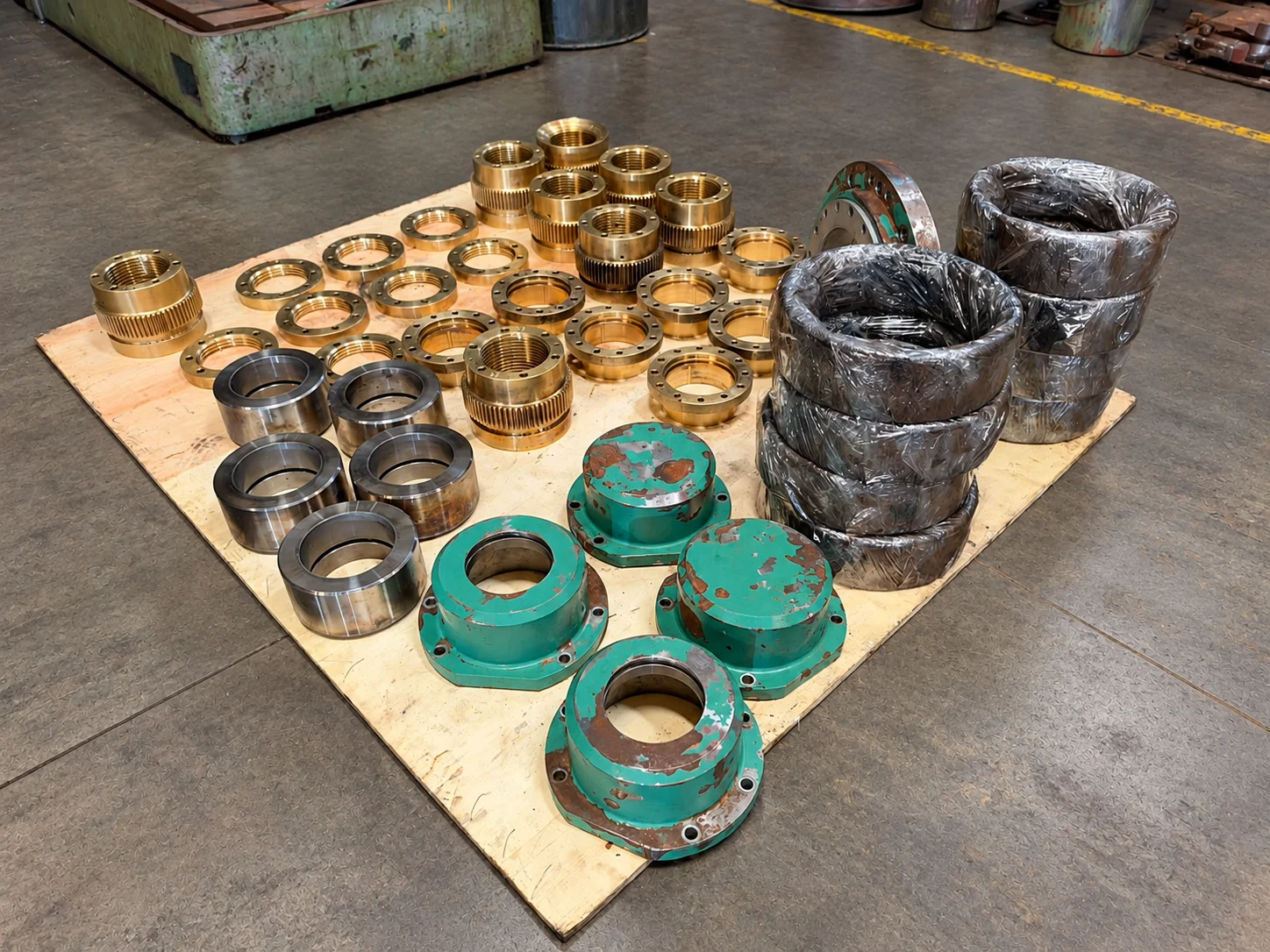
We stripped down each of the seven stands in our workshop and inspected it component by component, starting with the parts that control the roll gap. Where a component was too worn to restore, we replaced it, and the replacement parts for lines of this kind are among the bar and section mill parts we design and supply.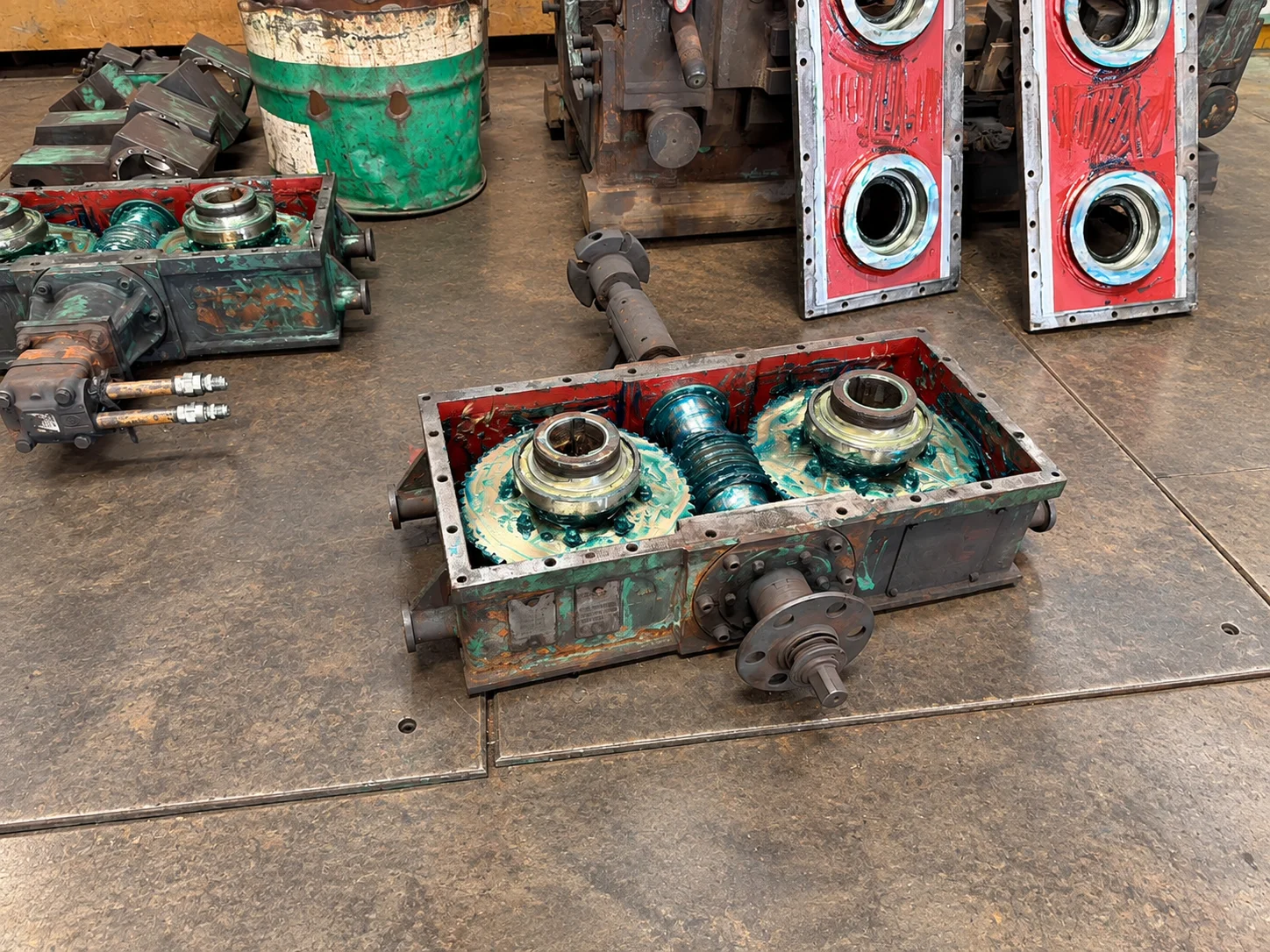
Screwdown spindles and bronze nuts
The screwdown spindles and their bronze nuts set the roll gap, so even slight wear on their threads affects the accuracy of each adjustment. As the threads wear, clearance and backlash increase, and an adjustment no longer moves the roll by the amount the operator expects. We check the threaded surfaces and bearing seats of the spindles for wear and corrosion, and we would normally replace bronze nuts with worn threads, since the bronze nut is intended to be the wearing part of the pair.Bearing housings, roll bearings and shafts
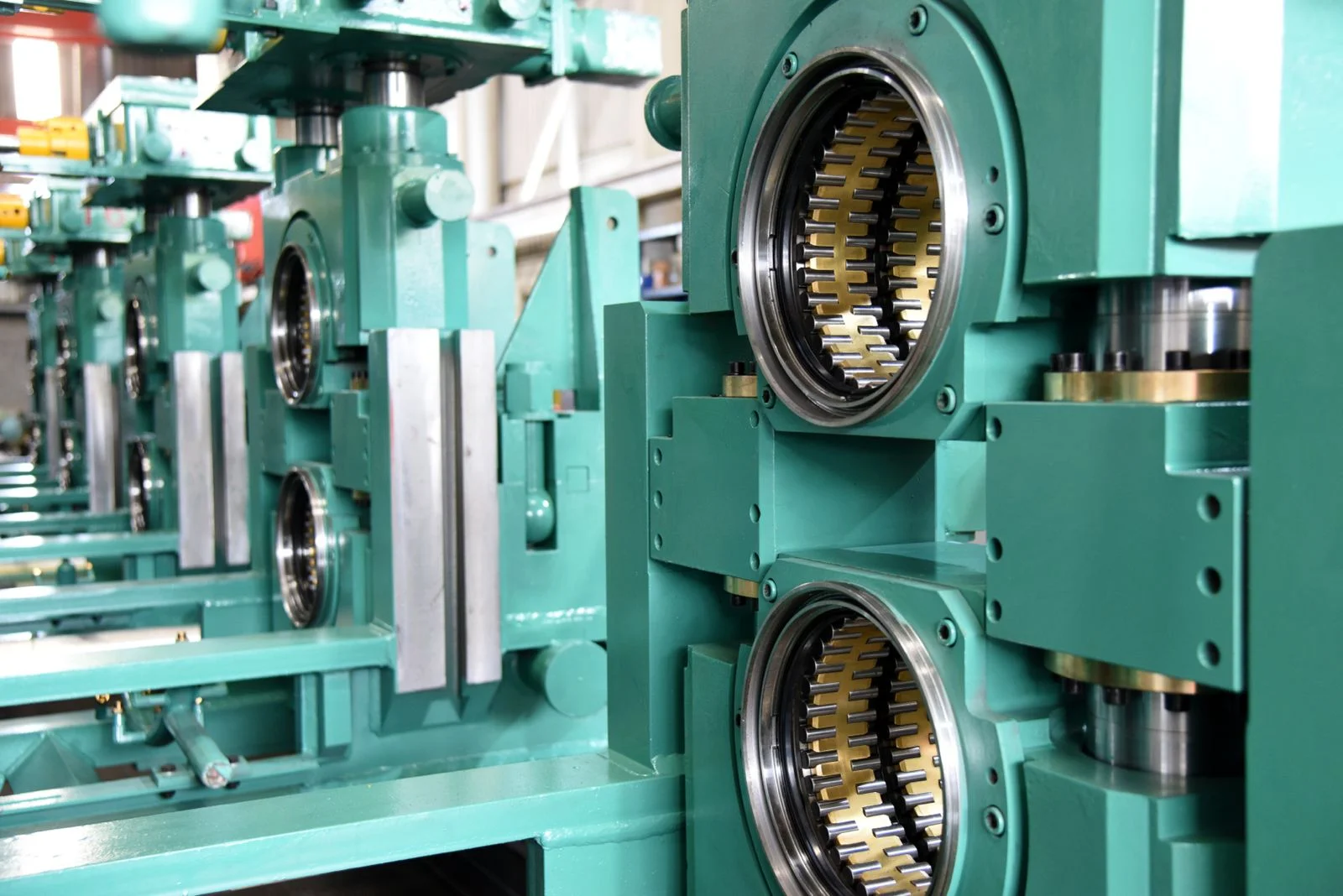
The roll bearings on this line were supplied by a European manufacturer, and the shafts were made in Germany. Wear on the bearing fits and on the mating surfaces of the housings changes how each bearing sits, and that affects alignment and rolling stability.It’s worth examining each bearing at strip-down for the type of damage it shows as well as the amount of wear. ISO 15243, the International Organization for Standardization (ISO) standard that classifies rolling bearing damage and failure modes by their appearance and likely causes, gives a mill’s maintenance team and its supplier a common reference when they compare what they have found.
Stand gearboxes with NTN bearings
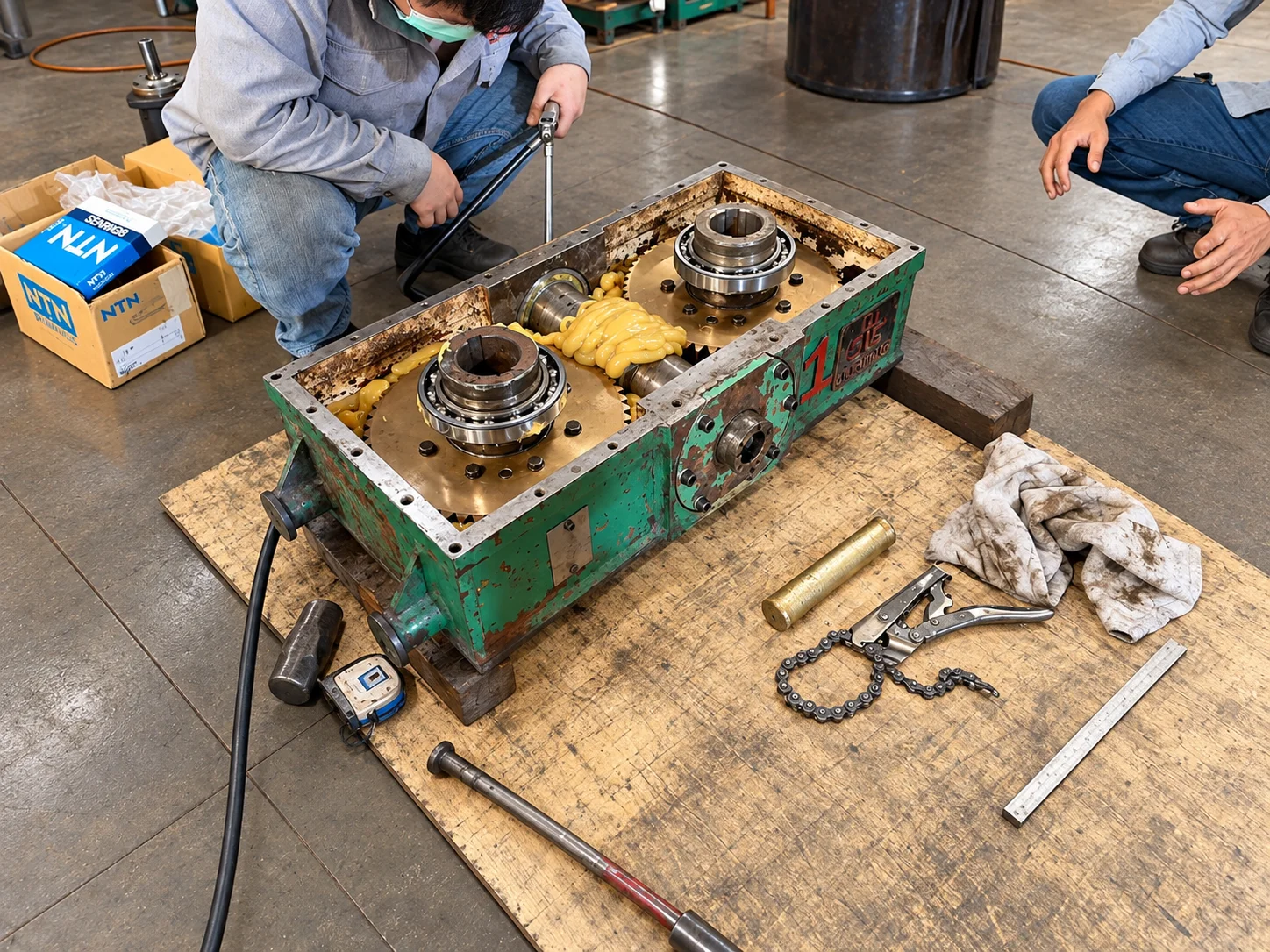
The gearboxes on these stands use bearings from NTN (the Japanese bearing manufacturer). Wear on the gears, bearings and shafts inside a gearbox tends to show as rising vibration and noise and as a loss of transmission efficiency, and it isn’t always obvious from outside the casing. We opened, cleaned and inspected the gearboxes with the stands and replaced their NTN bearings.Stand base and spindle spring dampers
The stand base doesn’t move, so it’s easy to overlook, but wear, corrosion or slight deformation of its mounting and contact surfaces affects how accurately the stand is positioned in the line. The spindle spring dampers absorb shock and control vibration, and as the springs fatigue they do less of that work. We inspected both along with the moving parts of each stand.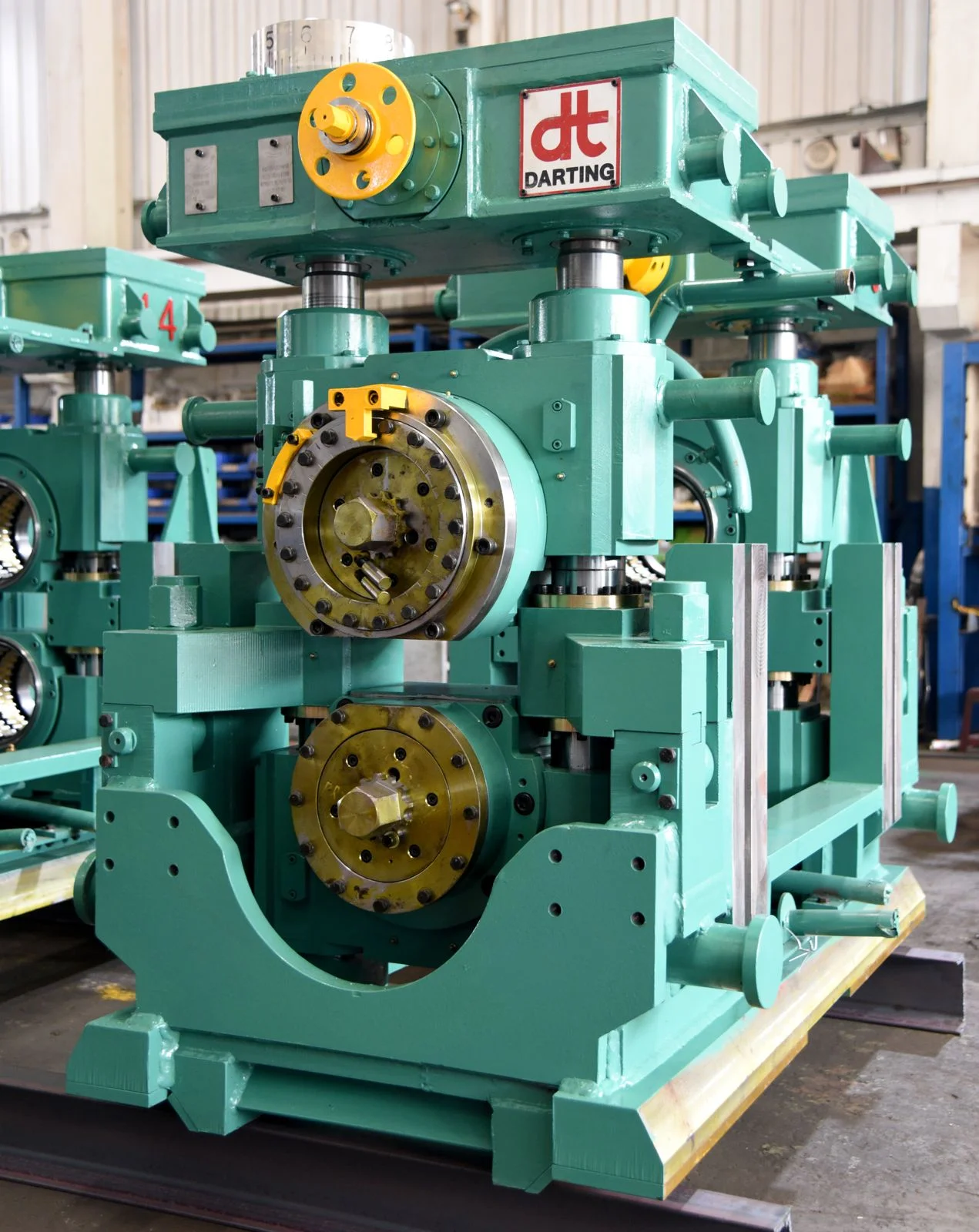
How the Stands Were Refurbished in Our Taichung Workshop
The seven stands were shipped from the mill to our Taichung workshop, and each one went through the same sequence of inspection, repair, replacement and reassembly before it was returned. Our work on the seven stands took about six months, not counting shipping between the mill and Taichung.Inspection and wear assessment
We began with a dimensional inspection of each stand, measuring the critical fits and contact surfaces to establish what had worn and by how much. This set the scope of work for that stand, since stands in different positions in the line can wear differently and rarely need exactly the same repairs.Re-machining contact surfaces and restoring bearing seats
We repaired or re-machined the worn contact surfaces and restored the bearing seats and mating surfaces so that the bearings and housings fit as they should. The aim at this stage is to bring back the dimensions, fits and alignment the stand needs for reliable operation, and cleaning up visible damage is only a small part of it.Replacing worn parts and reassembling each stand
We replaced the worn bearings, bronze nuts and other wearing parts, and inspected and repaired the screwdown mechanisms and spindle assemblies. We then reassembled and aligned each stand and checked its function before it left our workshop.Returning the stands in as-new condition
Once the mechanical work was complete, we cleaned and repainted the stands, and all seven went back to the mill in as-new condition. We wouldn’t call a refurbished stand a new one, since the frames and many original components remain in service, but in appearance and finish the stands were much as they were when we first delivered them.How Should Section Mill Operators Plan a Stand Refurbishment?
For a section mill whose housingless stands are structurally sound and still suit its products, planned refurbishment is usually the less disruptive choice, because it restores the worn parts on a date the mill sets without the lead time and installation work that new stands involve. Planning starts with that decision, and then with preparing the line and the shutdown.Refurbishing or replacing the stands
The table compares the three courses open to most operators once their stands have several years of service behind them.| Planned refurbishment | Replacement with new stands | Running to failure | |
|---|---|---|---|
| When the line stops | On a date the mill chooses | On a date the mill chooses, after the lead time for new equipment | Whenever a component fails |
| Scope of work | Strip-down, inspection, re-machining and replacement of worn parts | New stands built, with installation and commissioning on site | Repair of whatever has failed, often under time pressure |
| Effect on the product | Restores accuracy lost to wear | Accuracy of new equipment | Accuracy declines gradually before the failure |
| Control over planning | High | High, with a longer lead time | Little or none |
| Condition of the stands afterwards | Original frames, returned in as-new condition | New | Depends on the damage |
We would suggest replacement mainly where the stands no longer suit the product or the capacity the mill needs, or where a stand frame itself is damaged. Where the stands still suit the line, refurbishment on a planned interval tends to be the better value.
Taking a vibration baseline before the shutdown
It’s worth recording the vibration of each stand gearbox before the line stops, so that readings taken after refurbishment can be compared against a known starting point. ISO 20816-3 (published in 2022, and current as of October 2026) sets out how to measure and evaluate vibration on industrial machines rated above 15 kW and running between 120 and 30,000 r/min, using measurements taken on parts such as bearing housings, and its scope includes rolling mills and machinery with a geared stage. Acceptance testing of the gear units themselves is covered by a separate part, ISO 20816-9.Planning the shutdown while your stands are away
A line stops for as long as its stands are away, unless the mill holds a spare set, so the shutdown is worth planning around the refurbishment from the start. Bearings for stands of this size can carry long lead times (several weeks, and sometimes months, for precision components), and ordering them before the stands are shipped avoids waiting for parts once the work has begun. Our article on planning spare parts inventory for a rolling mill explains how to treat these components as critical spares. We would also suggest agreeing the shipping and workshop schedule with us before the line stops, and using the same stoppage for any other work on the line that can only be done while it is down.Frequently Asked Questions
How often should housingless rolling mill stands be refurbished?Darting recommends refurbishing the housingless stands on a C Channel Bar Line after every five years of continuous service, an interval based on the line’s operating hours and throughput. Lines rolling other products, or running fewer hours, may need a different interval, which is best set from the line’s own operating and quality records.
Does a rolling mill have to stop while its stands are refurbished?A rolling line stops while its housingless stands are away for refurbishment, unless the mill holds a spare set of stands. When Darting refurbished the seven housingless stands of a C Channel Bar Line in 2026, the work in our Taichung workshop took about six months, with shipping in each direction in addition. Planning the stoppage early also allows long-lead bearings to be ordered before the stands are shipped.
How should a mill prepare its stands before shipping them for refurbishment?Before housingless stands are shipped for refurbishment, it helps to record each stand’s number and position in the line and to note any faults seen in operation, such as noise, vibration or drift in the roll gap setting. Sending the maintenance records with the stands gives the refurbishment workshop a clearer picture of each stand’s history before the strip-down begins.
Which parts of a housingless stand are usually replaced rather than repaired?In a housingless stand refurbishment, worn bearings, bronze nuts and similar wearing components are usually replaced, while contact surfaces, bearing seats and mating surfaces are repaired or re-machined. Where an original component is no longer available from its maker, it can often be reverse engineered from the worn part.
Does refurbishment restore the roll gap accuracy of a housingless stand?Refurbishing a housingless stand addresses the parts that control roll gap adjustment, including the screwdown spindles, the bronze nuts and the bearing fits. Replacing worn nuts reduces the backlash that makes adjustment inaccurate, and restoring the fits brings back the alignment the stand needs for stable rolling. How closely a stand returns to its original accuracy depends on its condition before the work begins.
If the stands on your own line are approaching five years of service, the screwdown nuts, the bearing fits and the gearbox bearings are a sensible place to start, and Darting can review what you find with you before you set a date for the shutdown. We refurbished these seven stands in our Taichung workshop on a line we built ourselves, and we would be glad to discuss a similar program for your mill.